The project in detail
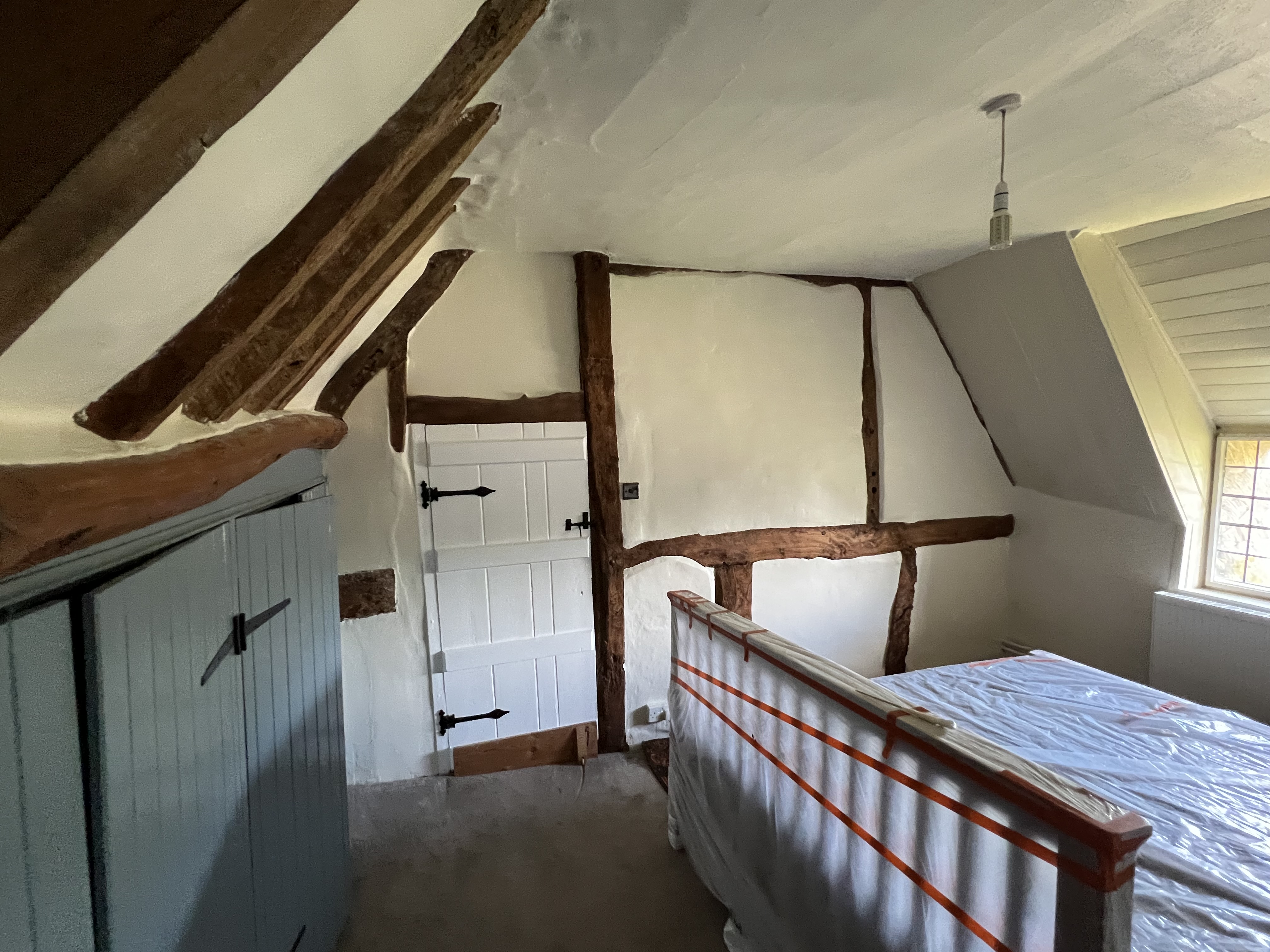
We were brought to this 18th-century Oxfordshire cottage bedroom to stabilise the ceiling and repaint, not to perform a full conservationist or heritage restoration finish. That distinction matters. A proper conservation approach to an 18th-century ceiling is an entirely different discipline: it involves specialist tradespeople, period-appropriate materials, and a cost that is in a different category entirely. What the customer needed, and what we were engaged to do, was to consolidate a failing surface and redecorate to a clean, liveable standard within a realistic budget. The ceiling had been actively crumbling, and before any paint could be applied it needed treating and sealing throughout to stabilise it and stop further deterioration. That preparation work is unglamorous and time-consuming, but without it nothing applied on top would hold. Once stabilised, the ceiling and walls were colour drenched in Farrow & Ball Modern Emulsion, the same shade across both surfaces, which creates a cohesive, enveloping finish that suits the character of the room. The veined appearance of the ceiling reflects its age and the stabilisation work; those marks are sealed and stable, not active problems. The fitted wardrobes were finished in Farrow & Ball Modern Estate Eggshell and the white doors in Johnstones Trade Aquaguard Satin. The exposed beams were protected throughout and were not part of the scope; any paint marks on them were left by previous decorators. The window was also outside this project's scope. It is worth saying honestly that the customer may in future choose to replace the ceiling altogether. The cost of doing so, and the resulting appearance, would be significantly different from what stabilisation produces. Both are valid paths; they are just different ones, and the right choice depends on budget and what the customer ultimately wants from the room.
Farnham, Faringdon, Oxfordshire
Location